

Young Scientists' Satellite
Tuesday, February 09, 2027 from 12:00
Auditorium A
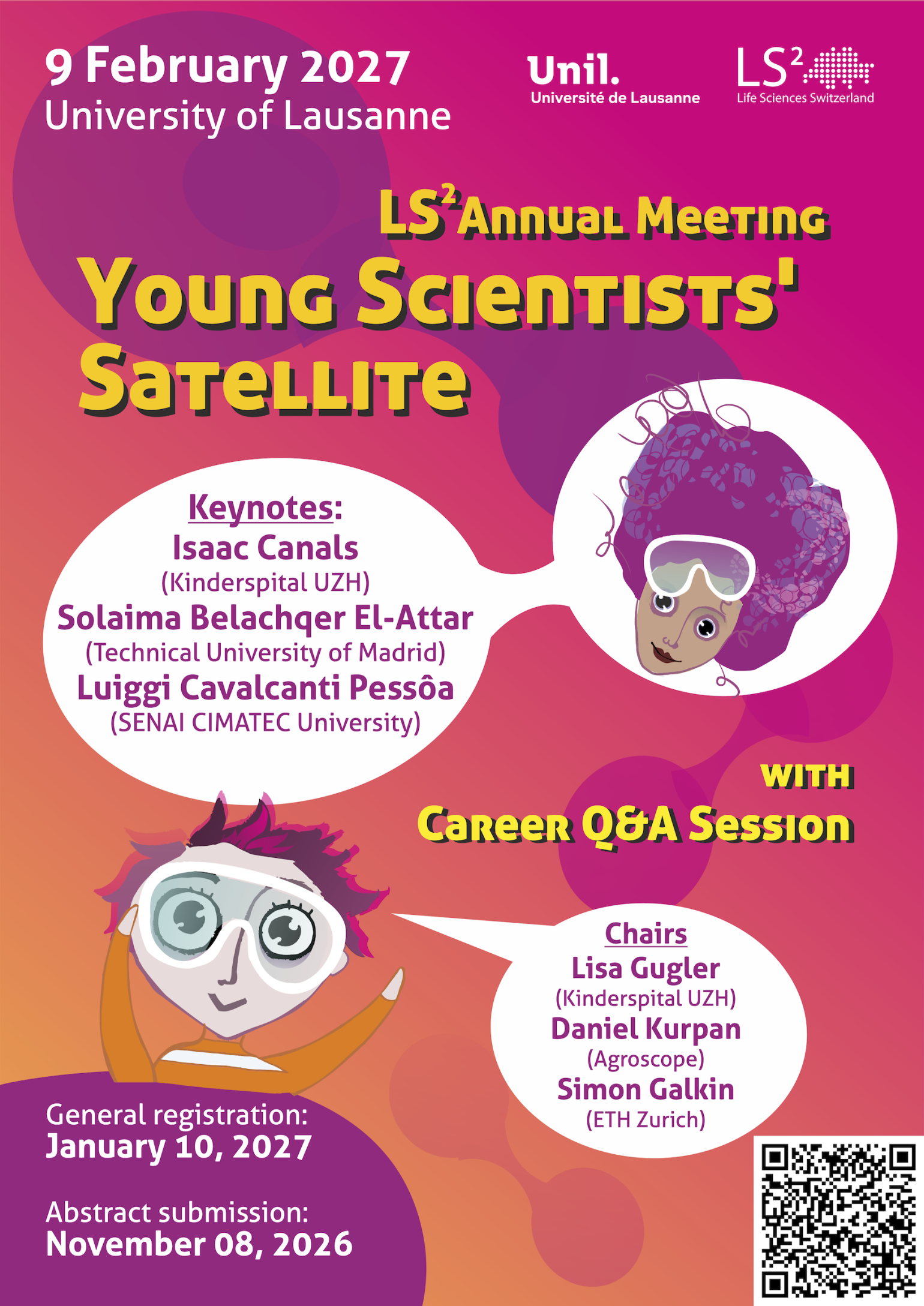
The Young Scientists’ Satellite (YSS) is a dedicated event for early-career researchers, taking place on 9 February 2027 alongside the LS2 Annual Meeting in Lausanne. This year’s programme puts career development and the realities of building a career in academia at the centre, featuring three inspiring keynote speakers who will share their personal and often non-linear journeys towards research independence. A dedicated Career Q&A session will provide an opportunity to ask questions and discuss career choices, challenges and opportunities directly with the speakers. The afternoon will also feature scientific presentations and plenty of opportunities to connect, exchange ideas and build your network with fellow young scientists.
Join us for an inspiring afternoon of science, career insights and networking and meet the researchers shaping the next generation of life sciences!
YSS chairs
Daniel Kurpan (Agroscope)
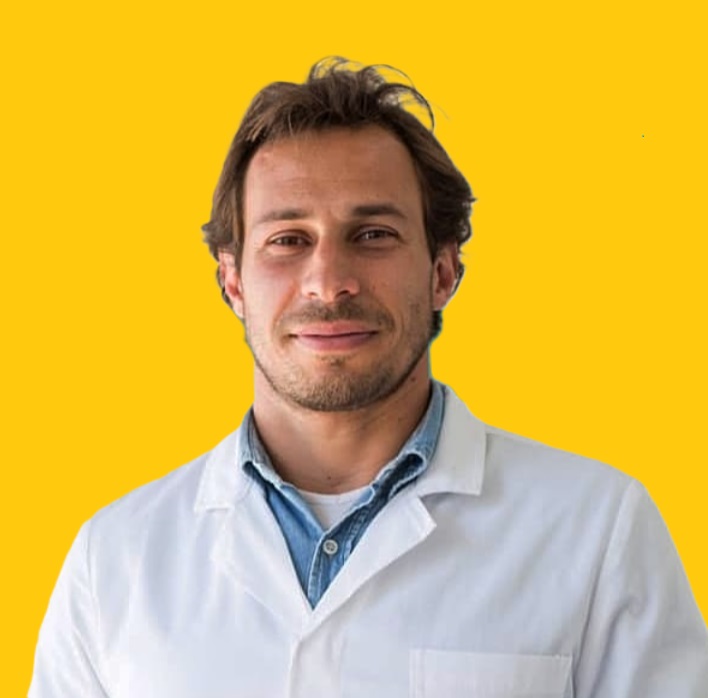
Daniel is a Brazilian researcher specialized on the cultivation, physiology, and application of algae biomass and byproducts. For the past two years, he has been working on agricultural applications of microalgae at Agroscope (Bern). He feels honored and excited to chair such an interesting event for young scientists.
Lisa Gugler (Kinderspital UZH)
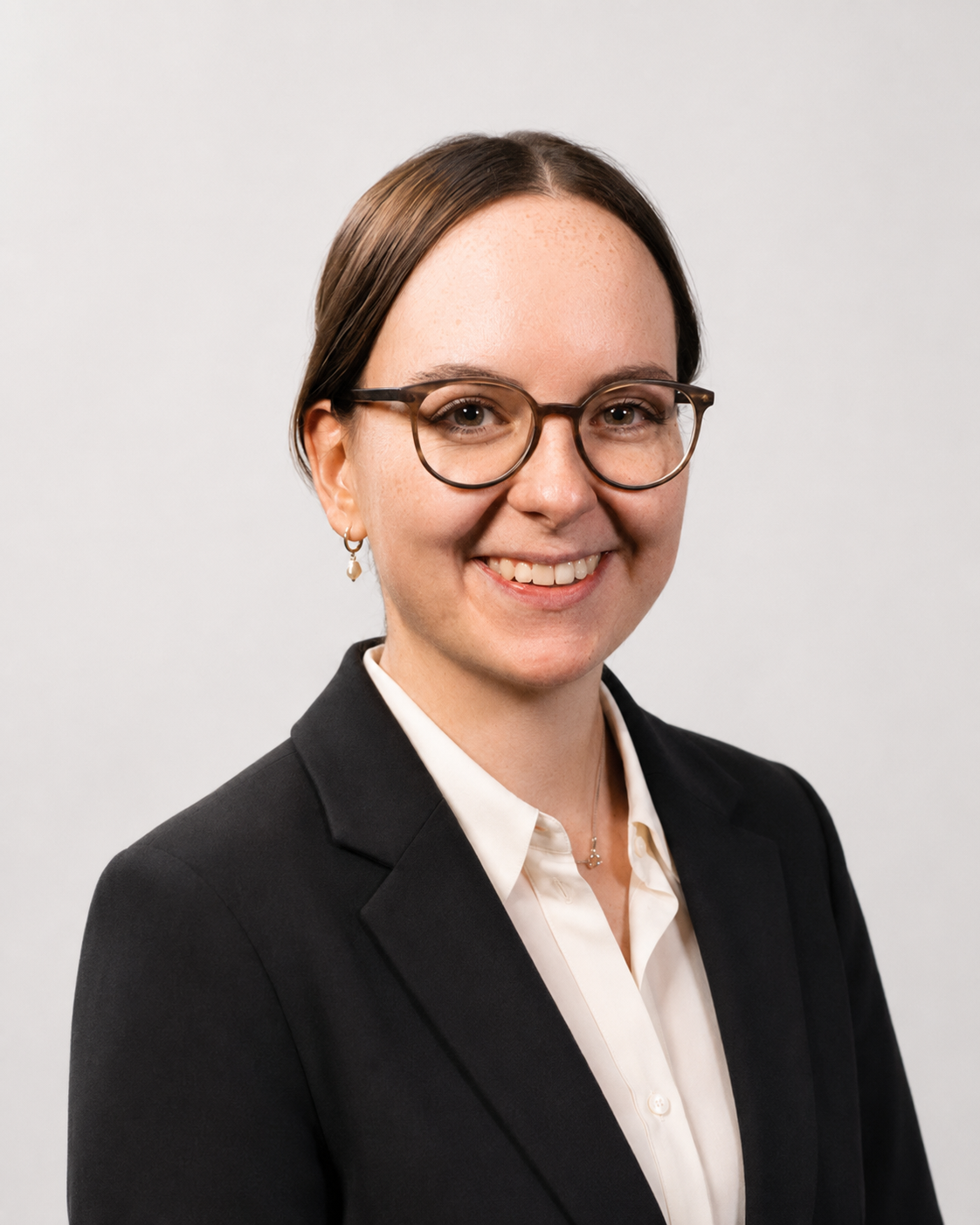
At the intersection of regenerative medicine, biomaterials science and tissue engineering, Lisa Gugler investigates bioactive chitosan-based hydrogel systems for the treatment of chronic diabetic wounds. As a PhD candidate in the Tissue Biology Research Unit in Zurich, her work focuses on the biological validation of peptide-functionalized biomaterials designed to modulate inflammation, promote vascularization and support the recruitment and activity of regenerative cell populations. As Chair of the Satellite Event, she is committed to connecting early-career researchers, encouraging meaningful scientific exchange and creating an inspiring and welcoming environment for interdisciplinary discussion.
Simon Galkin (ETH Zurich)

Simon is a PhD student in Gerhard Schratt's Lab at ETH Zurich who is passionate about neuroscience and molecular biology. As the chair of the Satellite event, he looks forward to welcoming everyone and helping people connect.
YSS Keynotes
Solaima Belachqer El Attar (Technical University of Madrid, Spain)

Bio: Dr. Solaima Belachqer-El Attar is an Assistant Professor at the Technical University of Madrid and a member of the GAqua Research Group. She holds an International Ph.D. in Biotechnology and Industrial Bioprocesses from the University of Almería, where her research on the solar chlorphoto-Fenton process was awarded the 2026 Best AOP Thesis Prize. Her work focuses on the scale-up of advanced oxidation processes for sustainable water reuse, resulting in the implementation of demonstration plants in real wastewater treatment facilities. Dr. Belachqer-El Attar has been recognized with the 1st Prize for Best Women Inventor by the Spanish Patent and Trademark Office (OEPM). A strong advocate for international collaboration, she has conducted research at Aalborg University and serves as deputy coordinator of the RII-AMAS network. She is the Principal Researcher of the SOL4REUSE project and an active contributor to European initiatives including LIFE PHOENIX and SFERA III projects.
Talk title: Belachqer-El Attar, S. et al. (2027). In progress.
Abstract: Every scientific career is, at its core, an ongoing experiment, one without a fixed plan, a guaranteed outcome, or a predetermined endpoint. This talk traces the trajectory of a young scientist who, in just five years, moved from a research fellowship to an assistant professorship, without ever losing sight of the question that started it all: how can we make water reuse a reality for rural water-stressed regions? The story follows the development of solar photo-Fenton technology from bench-scale reactors to demonstration plants implemented in real wastewater treatment facilities, a journey of scaling up not only photoreactors, but also confidence, collaborations, and scientific identity. However, this talk is not a list of achievements. It embraces the in progress, the failed experiments, the doubts between contracts, the teaching hours that shaped a vocation, and the "et al." of mentors, collaborators, and networks who made every milestone possible. Intended for early-career researchers, this offers not a blueprint but a reflection on building a life in research when the manuscript is not yet submitted and the best data may still be ahead.
Luiggi Cavalcanti Pessôa (SENAI CIMATEC University)

Bio: Luiggi Cavalcanti Pessôa is an Assistant Professor and Researcher at SENAI CIMATEC University (Brazil). His research focuses on circular bioeconomy, microalgae biotechnology, waste-to-value systems, biorefineries, and biogas and biomethane development. He holds an M.Sc. in Energy and Environment from Universidad Adolfo Ibáñez (Chile) and a Ph.D. in Chemical Engineering from the Federal University of Bahia (Brazil), including a visiting doctoral appointment at the University of Almería (Spain). Dr. Pessôa combines academic, industrial, and applied R&D experience, including leadership roles in manufacturing operations. He develops research grant proposals and leads collaborative research and innovation projects involving industry, government, and international partners, advancing resource recovery, circular economy, and energy transition solutions. He is the Technical Coordinator of the MBI in Circular Economy at SENAI CIMATEC and was recognized for his doctoral research with the 2024 UFBA Best Engineering Ph.D. Thesis Award and the 2025 UFBA Polytechnic School Recognition Award.
Talk title: From the Factory Floor to the Lecture Hall: An Unconventional Journey to Becoming a Young Professor
Abstract: More than once, I found myself standing on a factory floor, in different countries, convinced that industry would define my professional future. Yet one thing never went away: a persistent curiosity to keep growing, challenge myself, and better understand the world around me, even when I could not fully explain why.What followed was anything but a linear career path. A planned Ph.D. in Canada never materialized after scholarship funding was cut. I left industry to start over in a country whose language I did not speak. Personal losses and the passing of mentors forced me to rethink my priorities and sense of purpose. And when I finally secured a faculty position, a new international opportunity emerged, tempting me to change directions once again. This is not a talk about career planning. It is a story about uncertainty, curiosity, perhaps resilience, and how some of the most important decisions in life are often the ones we never intended to make. There was no roadmap. Looking back, many of the best decisions of my career were never part of the original plan. If these stories spark curiosity in even one person in the audience, then the journey will have been worthwhile. Hope you enjoy it!
Isaac Canals (University of Zurich – Kinderspital Zürich)

Bio: I studied biology at University of Barcelona and received my PhD in Genetics in 2015 by the University of Barcelona working on Sanfilippo syndrome. During my postdoctoral training at Lund University, I specialized in neuroscience, stem cells and genome editing for modeling neurodegenerative disorders. I established my own research group in 2021 at Lund University and later at the University Children’s Hospital of Zurich in 2023. The aim of my research is to generate different iPSC in vitro models to understand disease mechanisms of lysosomal storage disorders, the contribution of different brain cells to the pathology and what are the neurodevelopmental impairments in patients, as well as to develop new therapeutic approaches based on genome editing technologies.
Talk title: Reprogramming Myself Along the Way
Abstract: In my talk I would give some insights into my journey from a bachelor student at University of Barcelona until the moment I was appointed Assistant Professor at University of Zurich, a journey through my PhD in Genetics at Barcelona and my postdoc and initial independence at Lund University. I will give my view on what steps worked well for me, what I could have done differently and how my experiences and interactions with more experienced researchers shaped my interests but also how I perform my research and my supervision now. A personal reprogramming journey within academia.