Sponsored Talks
Present your latest products and the science behind them in one of our parallel sessions!
See the list of sessions HERE.
- 20 min talk: 2000 CHF
- 15 min talk: 1500 CHF
- 10 min talk: 1000 CHF
- 5 min talk*: 500 CHF
Join in to hear scientific talks from our sponsors!
In Symposium - From Disorder to Function: The Evolving Landscape of IDPs and Condensates, on 11.02.2026, 14:30 – 16:15
Valentina Millarte (Agilent Technologies (Schweiz) AG)
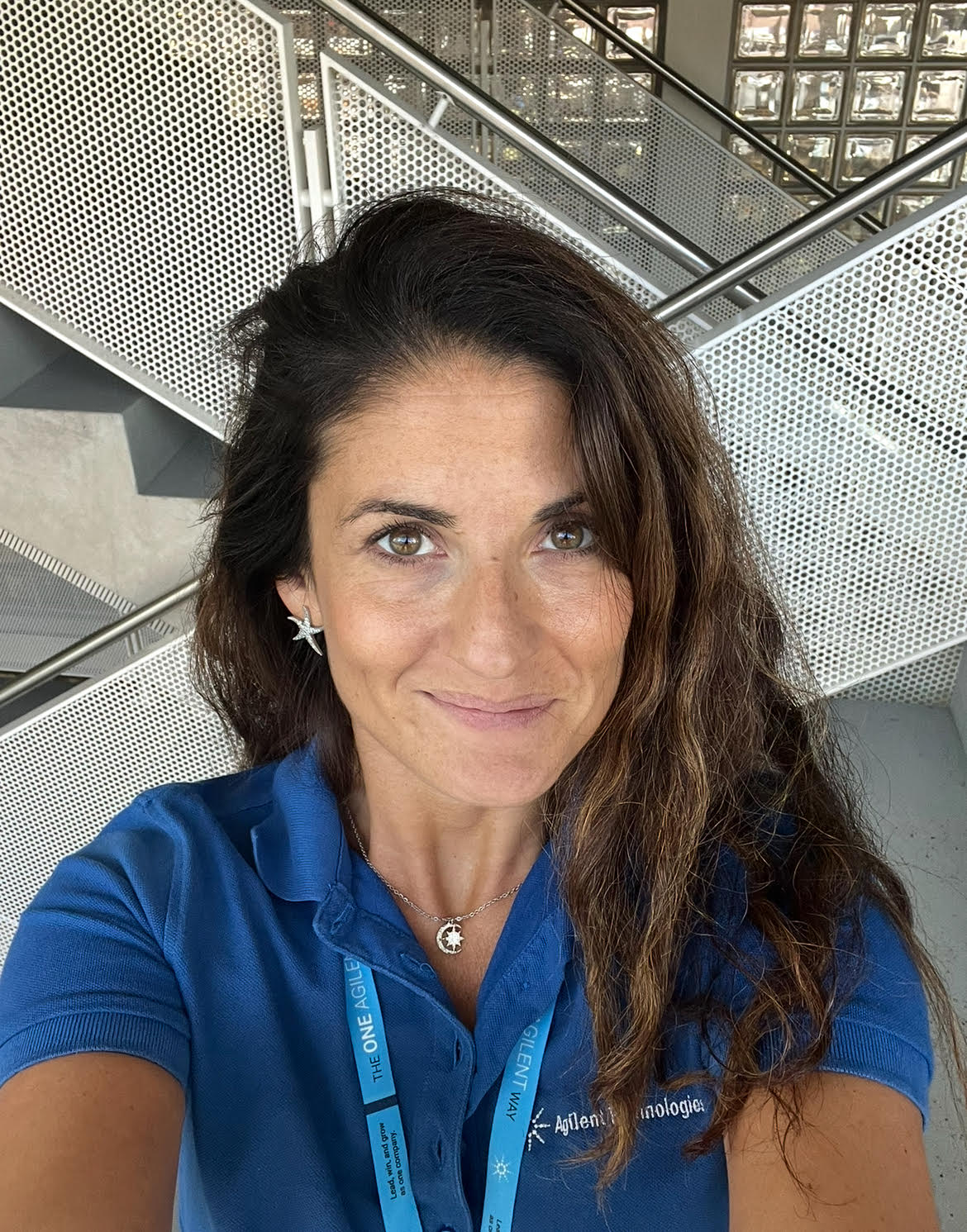
Title ”Take your real-time metabolic analysis to the next level. From 2D to 3D with the Seahorse XF FLEX analyzer”
All living cells need energy to survive, grow, and respond to their environment. Understanding how cells produce and use that energy is key to advancing research in areas like cancer, drug development, and regenerative medicine. The Agilent Seahorse XF Analyzers are tools that allow scientists to measure cellular energy use in real time without adding dyes. Traditionally, these tests were done on flat, two-dimensional (2D) cell layers, but real tissues are three-dimensional (3D). The new Agilent Seahorse XF Flex Analyzer offers a robust solution by enabling real-time, label-free quantification of key metabolic parameters including the oxygen consumption rate (OCR) and extracellular acidification rate (ECAR) in 3D samples. Using 3D cell models, such as spheroids or organoids, gives a more realistic view of how cells behave in the body. In this talk, we will explain how the Seahorse XF Flex Analyzer can measure energy production in these 3D samples, what makes it unique in the market, and why these new methods are helping scientists better understand how cells respond to stress, disease, and treatment.

In Symposium - Advancing Cancer Therapeutics Through Patient-Derived Complex Models, on 12.02.2026, 10:20 – 12:05
Markus Koester (Co-lead of opnMe at Boehringer Ingelheim) & Menorca Chaturvedi (opnMe Program Manager at Boehringer Ingelheim)
Title: “Decoding KRAS with opnMe: Insights from SOS1 inhibition and other collaborative research”
Through its open innovation platform opnMe, Boehringer Ingelheim provides free access to tool compounds and offers funding for research collaborations. From over 100 molecules that have been made available via opnMe, six molecules specifically target the KRAS signaling pathway, recognizing its central role in disease pathology. Meanwhile, the KRAS molecules from opnMe have been ordered more than 600 times by scientists from 37 countries and have enabled over 30 independent publications and initiated 11 research collaborations.
One of our collaboration calls focused on SOS1 inhibition and led to six research partnerships with academic groups, using BI-3406, designed to block SOS1-mediated activation of RAS, in diverse contexts. The outcome from the collaborations looks encouraging: in oncology, SOS1 inhibition emerged as a promising strategy for SOS1-mutant, RAS wild-type cancers. Beyond cancer, an unexpected avenue opened in diabetes research: using BI-3406, researchers demonstrated robust β-cell regeneration in human islets and diabetic mouse models, normalizing glucose control.
This and other findings will be highlighted as part of our talk. Together, they underscore the power of open innovation to advance fundamental biology and therapeutic concepts. By sharing molecules and fostering collaboration, opnMe has enabled discoveries that expand the potential of KRAS pathway modulation.
In symposium - Proteomics in the Era of Multi-Omics, on 12.02.2026, from 10:20 to 12:04:
Claudia Martelli (Bruker AG)

Title: Scalable and multi‑omics insights with PASEF, from single cells to tissues

In symposium - Advances in Volumetric Microscopy: from Method Development to Biological Applications, on 12.02.2026, from 10:20 to 12:05:
Stefan Wahl (Area Sales Manager, Zeiss Research Microscopy, Switzerland)
Title: One Snap. One Volume: Instant Volumetric High-Speed Imaging of Living Organisms

In symposium - Advances in Volumetric Microscopy: from Method Development to Biological Applications, on 12.02.2026, from 10:20 to 12:05:
Judith Reddington (Leica Microsystems)
Title: Visualizing Life in 3D at High Speed with Innovative Light Sheet Microscopy