Industry talks
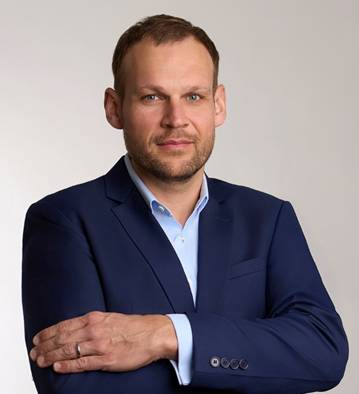
Dr. David Ramrath, Technical Sales Specialist at Analytik Jena (an Endress+Hauser company), Lecturer for AI Integration at ZHAW Wädenswil

Abstract
Laboratory automation offers substantial potential to improve reproducibility, throughput, and efficiency, yet the translation of experimental intent into executable robotic workflows remains a significant barrier for many scientists. Conventional automation environments often require users to understand instrument-specific programming concepts, deck layouts, liquid handling parameters, and software structures before an experiment can be transferred from the bench to an automated platform.
The integration of Briefly Bio with the CyBio FeliX liquid handling platform introduces a fundamentally different approach. Rather than starting with programming or manual workflow construction, scientists can describe the intended experiment in natural language. An AI-supported co-scientist interprets this scientific intent and translates it into a structured workflow composed of validated Protocol Action Blocks (PABs). The resulting assay can subsequently be reviewed, edited and refined by the scientist, including parameters, labware definitions and plate layouts, before being transferred through the local software environment to the CyBio FeliX for execution.
This approach creates a human-in-the-loop automation workflow in which generative AI simplifies protocol creation while the scientist retains control over the experiment. Briefly Bio emphasizes reviewable and editable automated workflows, robot-configuration validation, traceability of AI-driven changes, and identification of missing information or incompatibilities before execution. Briefly, Bio
Ultimately, the integration demonstrates a shift from programming laboratory automation to communicating with laboratory automation. By connecting natural-language experimental design with validated, instrument-executable workflows, AI can substantially lower the entry barrier to laboratory robotics and provide the foundation for increasingly adaptive and intelligent laboratory automation.